
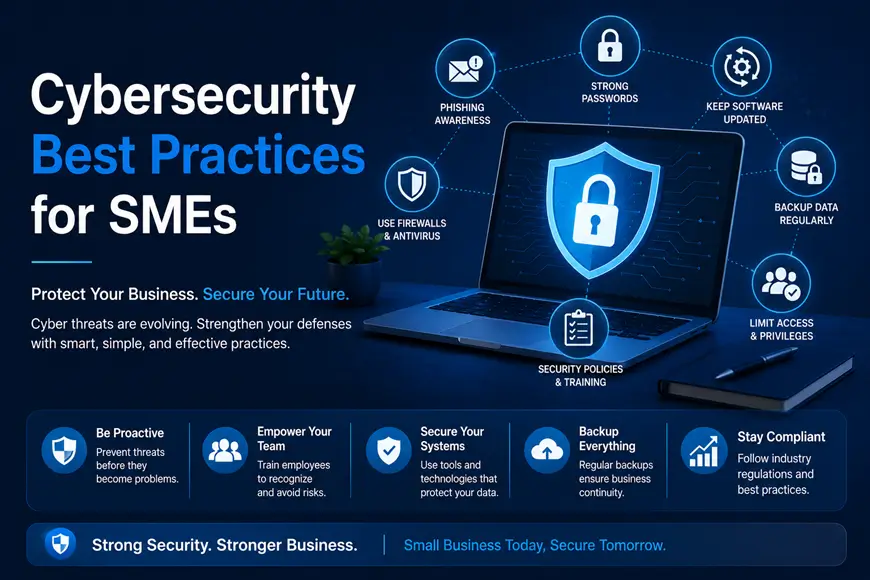
Cybersecurity Best Practices for SMEs
Small and medium enterprises are increasingly targeted by cybercriminals who view them as easier targets than large corporations. Implementing fundamental security practices can significantly reduce your risk exposure.
Essential Security Measures
Implement multi-factor authentication across all business accounts. Keep software and systems updated with the latest security patches. Use strong, unique passwords and consider a password manager. Encrypt sensitive data both at rest and in transit. Regularly back up critical data to secure, offsite locations.
Essential security measures every small and medium business in India should implement to protect data, systems, and customer trust from evolving cyber threats.
Employee Awareness
Human error remains the leading cause of security breaches. Regular security awareness training helps employees recognize phishing attempts, social engineering tactics, and unsafe browsing practices.
Incident Response Planning
Every SME should have a basic incident response plan that defines who to contact, how to contain breaches, and steps for recovery. Testing this plan periodically ensures your team is prepared when incidents occur.
Conclusion
Cybersecurity is not just an IT concern — it is a business priority. By implementing these best practices, SMEs can protect their operations, customers, and reputation in an increasingly hostile digital landscape.
- Small and medium enterprises are increasingly targeted by cybercriminals who view them as easier targets than large corporations.
- Implementing fundamental security practices can significantly reduce your risk exposure.